

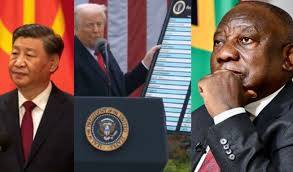
South African President Cyril Ramaphosa dismissed boycott politics as ineffective after several world leaders confirmed they would skip next week’s G20 summit, saying absent nations would miss crucial decisions affecting the global economy.
Speaking at a city cleanup event in Soweto on Thursday, Ramaphosa said the summit would proceed despite the withdrawals of leaders from the United States, China, Russia, Argentina and Mexico.
“We have said that boycott politics never work because the show will go on,” Ramaphosa said at Walter Sisulu Square in Kliptown. “We will continue and take fundamental decisions on matters that affect people of the world.”
U.S. President Donald Trump announced last week that no American officials would attend the Nov. 22-23 summit, citing disputed claims about treatment of white South Africans. Chinese President Xi Jinping will send Premier Li Qiang in his place, while Russia and Argentina will also send representatives instead of their leaders.
The Johannesburg summit marks the first G20 leaders’ meeting on African soil. The group represents 80 percent of the global economy and includes the world’s major developed and developing nations.
Ramaphosa expressed satisfaction with Johannesburg’s preparations for the summit, praising infrastructure improvements during his inspection of the city’s revitalization efforts.
The South African president maintained that those choosing not to attend would be most affected by their absence. “It is those who choose not to attend who will be most affected,” he said.
Trump’s boycott follows tensions over South Africa’s foreign policy positions, including its pursuit of Israeli accountability at the International Court of Justice over Gaza. The U.S. is scheduled to assume the G20 presidency from South Africa at year’s end.
Russian President Vladimir Putin faces travel restrictions due to an International Criminal Court arrest warrant. Argentine President Javier Milei aligned with Trump’s boycott, while Mexican officials have not confirmed their leader’s attendance.
Despite the high-profile absences, core emerging market leaders from India and Brazil are expected to attend, along with representatives from Japan, the European Union and other G20 members.
The summit agenda includes discussions on climate change financing, global inequality and economic development priorities for developing nations.