

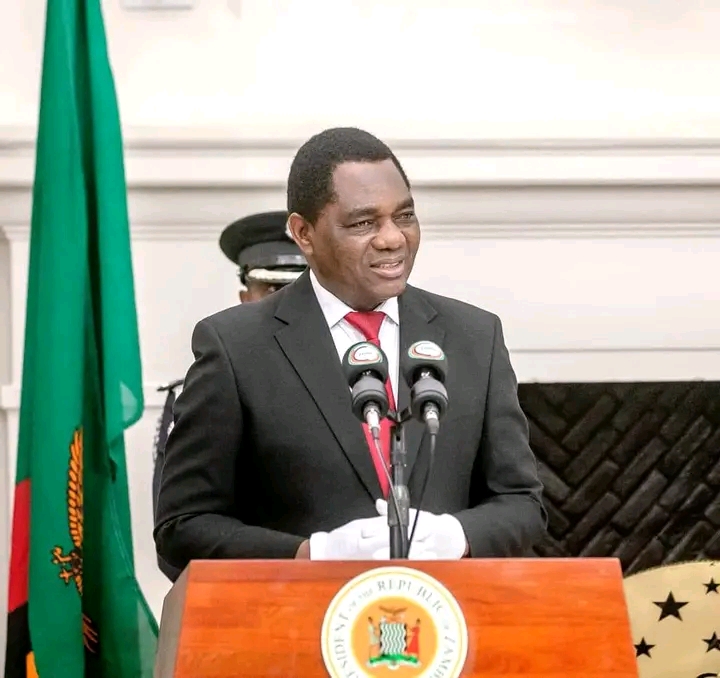
Hakainde Hichilema’s Political Ideology
By George Mtonga
1. Economic Liberalism and Free Markets
HH advocates for a market-driven economy where the private sector is the main engine of growth.
He believes in reducing government inefficiencies, promoting competition, and creating an enabling environment for businesses to thrive.
His administration has pushed for fiscal discipline, dismantling monopolistic structures, and encouraging investment.
2. Fiscal Discipline and Reformist Governance
He emphasizes sound public financial management—cutting wasteful expenditure, restructuring debt, and prioritizing sustainable borrowing.
His government introduced reforms like repealing outdated debt laws and strengthening the Public Debt Management Act, underscoring transparency and accountability in public finance.
3. Rule of Law and Institutional Strengthening
HH insists on restoring independence of institutions and combating corruption through legal and regulatory reforms.
He promotes fairness in governance, signaling a shift from patronage politics to merit-based systems.
4. Human Development and Social Investment
He strongly supports education and health as investment priorities, pushing their budget shares upwards (nearing 30% of the national budget).
His ideology holds that empowering human capital is essential for long-term economic transformation.
5. Inclusivity and National Unity
HH positions himself as a leader for all Zambians, regardless of ethnicity, political affiliation, or region.
His governance rhetoric stresses unity, professionalism, and shared responsibility in nation-building.
Why Leaders Should Aspire to This Ideology
1. Sustainable Growth Model
A free-market, private-sector-driven approach fosters innovation, job creation, and resilience in the economy. Other leaders emulating this will anchor Zambia’s development on competitiveness rather than dependence.
2. Restoring Public Trust
Fiscal discipline and anti-corruption measures build confidence among citizens and investors alike. Leaders who adopt these beliefs can rebuild trust in government institutions.
3. Human-Centered Development
Prioritizing education and health ensures Zambia has a skilled, healthy, and productive population. Future leaders who uphold this will accelerate poverty reduction and unlock long-term prosperity.
4. Democratic Maturity
By strengthening institutions and ensuring the rule of law, leaders secure Zambia’s democratic gains and protect against authoritarian backsliding.
5. National Unity as a Development Pillar
An inclusive, non-tribal, and unifying leadership vision creates stability, which is a precondition for attracting investment and fostering peace.
Closing Thought
President Hakainde Hichilema’s ideology blends economic liberalism, fiscal discipline, institutional strengthening, and social investment. If future Zambian leaders adopt these principles, the country will not only stabilize economically but also build a governance culture rooted in accountability, unity, and prosperity for all.