

IBA Has No Authority Over Social Media: My Take on the KBN “Alebwelelapo” Post
By Thandiwe Ketiš Ngoma
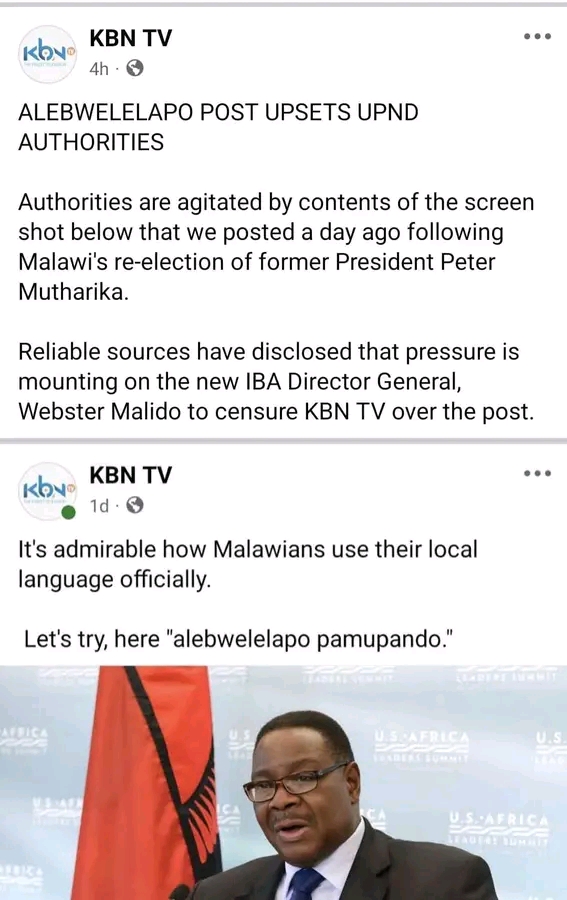
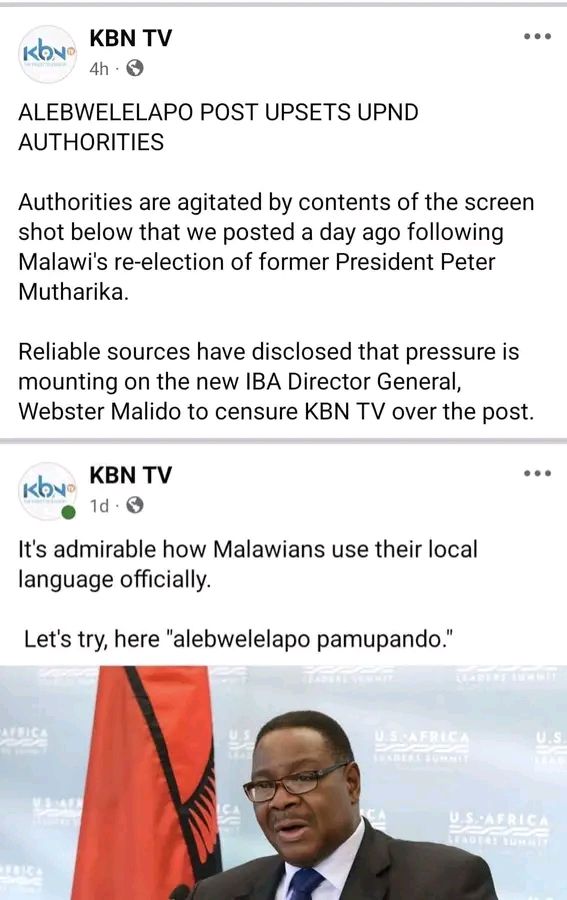
I just read a post on the KBN Facebook page that, according to several reliable sources, has apparently unsettled some authorities.
The post shared a screenshot praising Malawi for officially using local languages and added the line, “Let’s try it, alebwelelapo pamupando,” following the re-election of former Malawian President Peter Mutharika.
The phrase alebwelelapo pamupando loosely means “he is coming back to the seat,” which many people took as a playful but political statement.
Now I’m hearing that pressure is mounting on the newly appointed Independent Broadcasting Authority (IBA) Director General, Webster Malido, to censure KBN TV over this Facebook post.
First things first: the IBA has no legal authority to regulate social media content.
The IBA Act No. 17 of 2002 (as amended) clearly states that the Authority’s mandate is to “license, regulate and supervise broadcasting services,” meaning radio and television broadcasts, not private social media updates.
Facebook posts fall under general Zambian laws such as the Cyber Security and Cyber Crimes Act of 2021 or the Penal Code if a post contains hate speech, defamation, or incitement, but the IBA has no jurisdiction there.
The Zambian Constitution also protects freedom of expression.
Article 20(1) guarantees every person “freedom of expression, which includes freedom to hold opinions without interference, freedom to receive ideas and information without interference, and freedom to impart and communicate ideas and information without interference.”
A simple phrase like alebwelelapo—whether people see it as cultural, humorous, or political—falls within this constitutional protection as long as it does not promote violence or hatred.
To me, the idea that a social media remark could attract regulatory threats shows a worrying misunderstanding of the law.
KBN’s Facebook page is not a licensed broadcast frequency.
It is a digital platform where opinions and commentary, sometimes political and sometimes light-hearted, are shared.
Authorities may dislike the message, but discomfort is not a legal basis for punishment.
This incident is a reminder of how important it is to safeguard media independence and constitutional rights in Zambia’s digital age.
Regulators must stick to the powers given to them by law, and citizens must remain vigilant in defending their right to speak, debate, and even tease those in power without fear of unlawful censorship.
Ketis grow up. KBN TV is desperately trying to get noticed especially as we head towards the 2026 elections in August. The easiest way is to claim that authorities are after them.
Theirs is a stupid post which bears no relevance to reality. Maybe if they had posted something about one of the opposition parties winning. But alebwelelapo? Who? Ketis, ask yourself this basic question before going on your usual rant.