

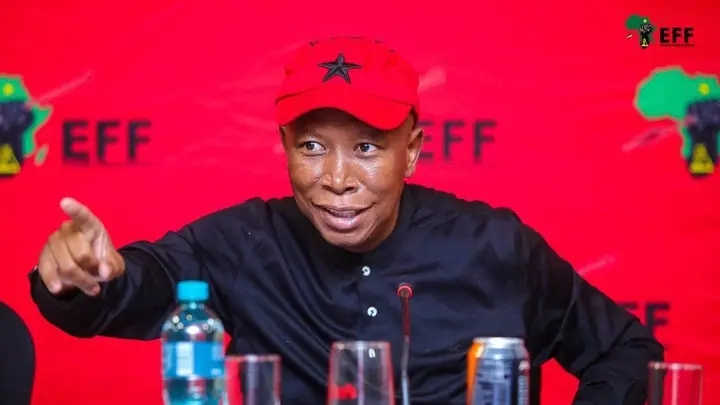
“Julius Malema Calls For One African President, One Currency And Open Borders Across Africa As He Pushes His Vision Of A United Continent Without Division”
EFF leader Julius Malema has sparked massive debate across Africa after calling for the creation of a single African presidency, a common African currency and a borderless continent during a conference in Nigeria.
Speaking to delegates and political leaders, Malema argued that Africa will never become truly powerful while African countries remain divided by borders created during colonialism.
According to Malema, African nations should move toward:
one united African economy,
free movement of African citizens,
stronger continental trade,
a shared African identity,
and eventually one African leadership structure.
He claimed Africa has enough natural resources, population and economic potential to compete with global powers if the continent becomes more united politically and economically.
Malema also criticized the continued dependence on Western financial systems and foreign currencies, arguing that Africa must build its own independent economic power.
The EFF leader further stated that African citizens should be free to live, work and do business anywhere on the continent without visa restrictions or border limitations.
His comments immediately triggered fierce reactions online:
Supporters praised his vision as “true Pan-Africanism” and said Africa must unite to become globally powerful,
while critics warned that borderless policies could worsen illegal immigration, crime, unemployment and pressure on struggling economies.
Others questioned whether African governments could realistically agree on:
one currency,
one president,
shared laws,
and common economic systems given the continent’s political differences and ongoing conflicts.
The debate quickly spread across social media as people argued over:
Pan-African unity,
immigration,
sovereignty,
economic integration,
and the future of Africa’s political direction.
Malema’s remarks have once again positioned him as one of Africa’s most outspoken voices on continental unity, while also intensifying controversy around his broader political vision for South Africa and the African continent.