

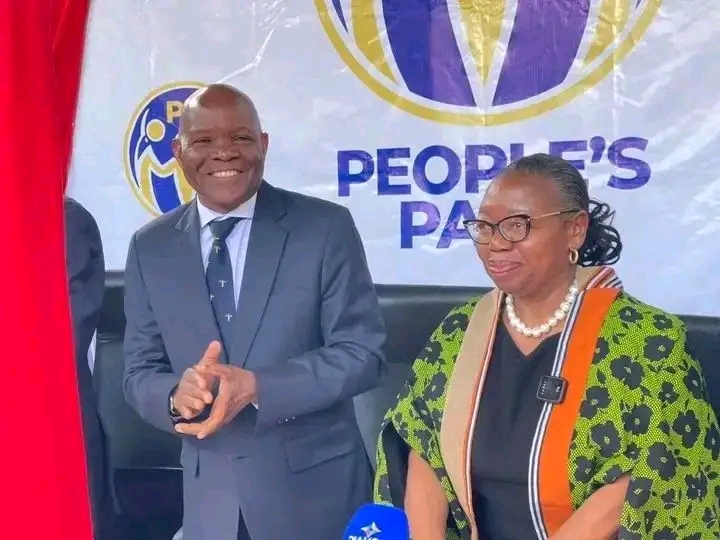
🇿🇲 THE CANDIDATES | M’membe–Banda Ticket: Ideology Without Machinery
The entry of Fred M’membe and Dolika Banda into the 2026 presidential race under the Socialist Party Zambia and the broader People’s Pact comes at a decisive moment in Zambia’s electoral cycle. Running mates are being unveiled. Alliances are taking shape. The question now is not who is contesting. It is who can win.
Dr. M’membe is not a new entrant. He is a seasoned figure in Zambia’s political and intellectual space. A lawyer, journalist, and former owner of The Post newspaper, he brings academic depth and ideological clarity. His party is explicitly socialist, rooted in Marxist-Leninist thinking . He has contested before. In 2021, he secured just 0.34 percent of the vote . This number matters. It tells you that while his ideas are structured, they have not translated into electoral traction.
This gap is not accidental. It is structural.
Zambian politics is not built from theory downward. It is built from territory upward. The Patriotic Front consolidated the northern circuit before expanding nationally. The UPND anchored itself across Southern and Western regions before breaking into urban and mixed provinces. Elections are won through organised regional blocs that later scale into national coalitions. Dr. M’membe has not built that base.
His appeal sits in lecture halls, radio discussions, and policy conversations. It does not yet sit in wards, markets, and rural constituencies where elections are decided.
There is also a messaging problem. M’membe is articulate. That is not in dispute. But his tone often carries a sense of ideological rigidity and, at times, bitterness in criticism. His attacks on government frequently sound less like persuasion and more like condemnation. That limits his ability to attract undecided voters. Elections reward persuasion, not just conviction.
Then comes the running mate.
Dolika Banda represents a different world altogether. Her background is corporate. Her language is economic governance, financial systems, institutional reform. Her previous alignment with reform-driven platforms, including efforts linked to movements like the Movement for National Renewal, placed her firmly in a capitalist, technocratic space. That is where the contradiction begins.
This is a ticket straddling two ideologies.
On one side, a socialist leader whose worldview draws inspiration from countries like Cuba and Venezuela. On the other, a corporate executive shaped by market systems and private sector logic. In theory, this could balance the ticket. In practice, it risks ideological confusion. Voters must understand what you stand for before they decide whether to trust you.
Right now, this pairing raises that question more than it answers it.
There is also a political style issue. Neither M’membe nor Banda are natural rally politicians. They are not organic mobilisers. They are not grassroots energisers. M’membe can command a room on radio. Banda can articulate policy in a boardroom. But elections are fought in dust, not studios. They require presence, repetition, and emotional connection with ordinary voters.
This is where the ticket is weakest.
Even among young people and students who engage with their ideas, support often stops at agreement. It does not convert into votes. Why? Because the message, while intellectually sound, does not always speak to immediate lived realities. People want solutions they can feel now. Not frameworks they must interpret.
To their credit, the duo is not without value. They elevate the conversation. They bring discipline to policy debate. They challenge dominant economic thinking. In a fragmented opposition landscape, that matters. They may shape the agenda even if they do not dominate the ballot.
But Zambia’s elections are unforgiving to intellectual politics without structure.
Without a clear regional anchor. Without a visible grassroots machine. Without a message that translates beyond educated urban audiences, the M’membe–Banda ticket risks remaining influential in discourse but marginal in outcome.
The path to State House in Zambia is not built on ideas alone. It is built on organisation, territory, and translation of message into movement.
Next on The Candidates: the dark horses, the regional power brokers, and the emerging parliamentary and council races shaping Zambia’s electoral map ahead of August 13.
© The People’s Brief | Ollus R. Ndomu