

🇿🇲 EDITOR’S NOTE | Nkombo, Succession Politics & UPND’s Internal War
Power is never just about the present. It is always about what comes next.
President Hakainde Hichilema is, by all serious political reading, headed toward victory in 2026. The opposition remains fragmented, reactive, and without a coherent national alternative. That reality is not in dispute. But beneath that strength lies a quieter, more dangerous question for the United Party for National Development.
Who comes after Hichilema?
This question is no longer theoretical. It is beginning to shape internal behaviour, alliances, and, more importantly, eliminations.
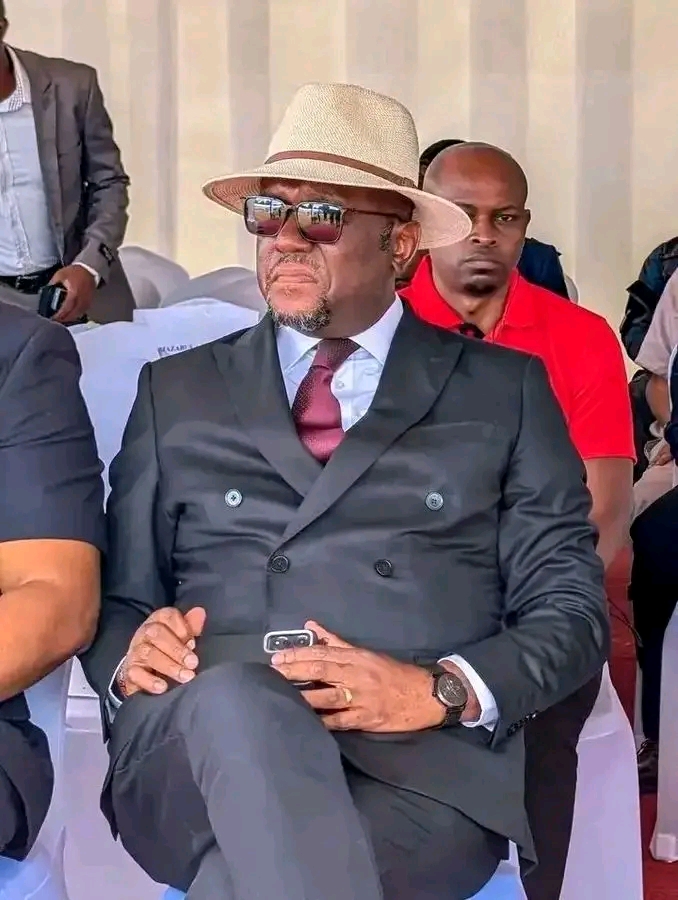
The case of Garry Nkombo must be read within that context. His removal from Cabinet, followed by his exit from the influential position of National Chairperson for Elections, is not just administrative reshuffling. It is political signalling. It tells us that succession politics inside UPND has begun, even if quietly.
And succession politics, by nature, is ruthless.
Nkombo is not an ordinary figure within UPND. He is part of the long struggle history of the party. He stood with Hichilema when the party was in opposition, when it faced repeated electoral defeats, and when state pressure was at its peak. Figures like this do not just hold positions. They hold memory, networks, and influence.
Removing such a figure creates questions. Not just about performance, but about intent.
Within political circles, a narrative is already forming. That there are emerging “cartels” within UPND, groups positioning themselves to shape the post-Hichilema order by neutralising potential successors early. Whether one agrees with this framing or not, its existence alone is significant. Perception in politics often becomes reality if left unmanaged.
History, as always, offers a warning.
President Rupiah Banda began to lose grip when internal trust broke down. Key allies were sidelined. The party weakened from within. The result was defeat in 2011. A decade later, Edgar Lungu faced a similar internal erosion. Fallout with influential figures exposed fractures within the Patriotic Front. The erosion did not just weaken the party. It signalled instability to voters. The outcome in 2021 was decisive.
These patterns are not identical. But they are instructive. A ruling party rarely collapses because of external opposition alone. It weakens when internal cohesion begins to fracture, especially around succession.
UPND today is strong at the top.
Hichilema commands authority. The party is expanding. Its policy direction, whether debated or supported, is clear. But strength at the top does not automatically translate into stability beneath. In fact, it often accelerates competition below, as ambitious figures begin positioning for the inevitable transition.
This is where the real risk lies.
If potential successors are systematically weakened, sidelined, or politically isolated, the party may secure short-term control but lose long-term depth. A party without a clear second line of leadership becomes vulnerable the moment transition arrives. Power gaps are rarely filled smoothly in such environments.
Nkombo is not the only target. If the current pattern continues, others perceived to have presidential potential will come under pressure. Some will be reshuffled out. Others will be politically contained. A few may withdraw quietly. What remains is a narrowed field, not necessarily by merit, but by survival.
That is not how strong parties build longevity. Succession is not a threat to power. It is its insurance.
UPND must therefore confront a difficult balance. It must maintain discipline and cohesion under Hichilema while allowing space for credible future leadership to emerge. Closing that space entirely may create temporary order, but it risks long-term instability..
This is not an opposition argument. It is a governance reality.
Zambia does not just need a strong president today. It needs a credible leadership pipeline for tomorrow. The absence of a clear successor does not weaken Hichilema now. But it raises uncertainty about what follows him.
And politics abhors uncertainty. The question is no longer whether Hichilema will win. The question is whether UPND is preparing to survive beyond him.
© The People’s Brief | Editors
It is better to start addressing this matter immediately after August 2026…
UPND must take this matter seriously or else, it will not be good by the time we are in 2031…