

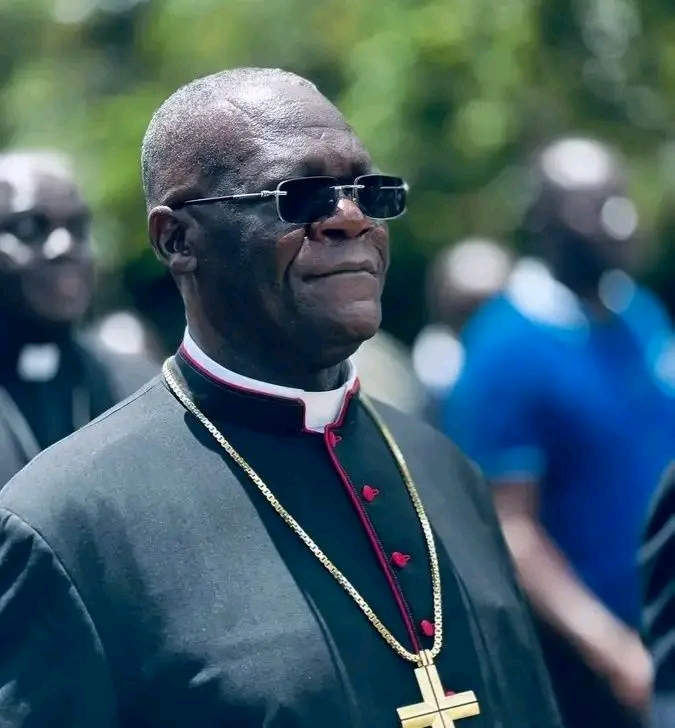
🇿🇲 EDITOR’S NOTE | Reading Through the Archbishop Banda-DEC Standoff
The summoning of Lusaka Archbishop Alick Banda by the Drug Enforcement Commission has evolved from a procedural investigation into a highly charged national debate, mixing law, faith, memory and politics. What is now circulating is not just concern over due process, but competing narratives about persecution, power and institutional boundaries. To make sense of the moment, the noise must be filtered from the facts.
The first set of facts is narrow and administrative. The DEC confirms that investigations into the disposal of ZRA vehicles did not begin yesterday. They date back several years and have already resulted in convictions of senior ZRA officials for procedural breaches. Records show that one Toyota Hilux, registration ALF 7734, passed through a chain of documentation that investigators now consider questionable.
The Archbishop was summoned after the Commission says it reached a stage of “solid information.” During questioning, the Archbishop reportedly chose to remain silent, a lawful right that carries no presumption of guilt.
A second set of facts complicates the moral framing. A ZRA employee, Mulopa Kaunda, whose name appears on the transaction trail, has given a detailed account denying any purchase, tender participation or transfer to Archbishop Banda. His testimony, corroborated in part by DEC statements confirming he pleaded innocence, suggests internal abuse of office and document manipulation within ZRA during the PF era.
This places the investigation squarely within a broader pattern of institutional misconduct that has already been judicially acknowledged, rather than a bespoke action targeting the Church.
Against this factual background, the Church’s public response has been expansive. Archbishop Ignatius Chama, speaking for the Zambia Conference of Catholic Bishops, has framed the episode as persecution, alleging that President Hakainde Hichilema is using state apparatus to “threaten, humiliate and persecute” Archbishop Banda, even warning that his life is in danger. This language is grave. It shifts the issue from legality to existential threat and from procedure to personal rivalry.
This framing raises difficult questions. There is, so far, no public evidence presented to substantiate claims that the Archbishop’s life is under threat from the state. The DEC summons, while publicly visible, followed an established investigative pattern used in other cases. The danger in escalating the rhetoric is that it collapses important distinctions between due process and persecution, and between an individual cleric and the institution of the Church.
Democracies rely on those distinctions to function.
Politics, however, is clearly present. Archbishop Banda has been an outspoken critic of successive governments, including the current one. His appearance at the DEC was preceded by a highly visible solidarity Mass, attended by opposition figures, and followed by competing political statements. This has allowed actors on all sides to read intention into procedure. In such an environment, institutions easily become symbols, and symbols are quickly weaponised.
There is also a question of institutional style. The Catholic Church traditionally resolves internal matters through discretion, dialogue and hierarchy. Public escalation, especially language invoking biblical fratricide and imminent danger, departs from that tradition and risks entangling the Church deeper into partisan conflict. As the proverb cited by Archbishop Chama notes, when elephants fight, the grass suffers. In this case, the grass includes ordinary faithful seeking reassurance that both their faith and the rule of law are intact.
A sober reading suggests two truths can coexist. It is legitimate for the Church to worry about selective enforcement and political misuse of state power. It is equally legitimate for law enforcement to investigate alleged proceeds of crime, regardless of the status or vocation of the person involved. Faith does not confer immunity, and investigation does not automatically imply persecution.
The way forward is restraint. The DEC should continue to communicate clearly, within legal limits, to avoid speculation filling the void. The Church, for its part, may find greater protection in dialogue and evidence-based engagement than in maximalist rhetoric.
Zambia has navigated tense church–state moments before. The test now is whether institutions can defend their mandates without turning a legal inquiry into a national rupture.
© The People’s Brief | Editors