

The Southern African Development Community electoral observer mission said Tanzania’s 2025 general election fell short of regional democratic standards, concluding that voters in most areas could not express their democratic will.
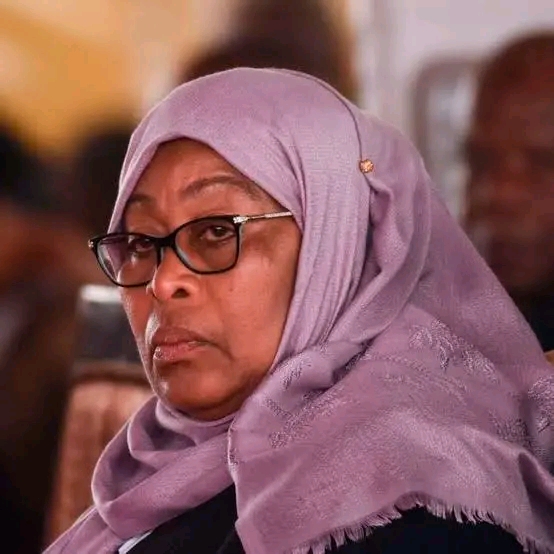
The preliminary statement from the SADC Electoral Observation Mission (SEOM), led by former Malawi parliament speaker Richard Msowoya, delivered a sharp rebuke to an election that saw President Samia Suluhu Hassan re-elected with 97.66% of votes after her main rivals were barred from running.
“In view of the Mission observations… it is the SEOM’s tentative conclusion that, in most areas, voters could not express their democratic will,” the statement said. “Overall, the 2025 General Election in the United Republic of Tanzania fell short of the requirements of the SADC Principles and Guidelines Governing Democratic Elections.”
The mission’s conclusion represents a rare criticism from the regional body, which deployed 80 observers across 27 of Tanzania’s 31 regions for the October 29 poll. SADC typically adopts non-confrontational approaches to member state elections.
Hassan was declared winner on Saturday following an election marred by violence, internet shutdowns and the deployment of military forces to quell protests. Her main challengers, including opposition leader Tundu Lissu of Chama Cha Demokrasia na Maendeleo (CHADEMA), were prevented from running.
Lissu has been held on non-bailable treason charges since April after calling for electoral reforms. His party was disqualified from participating after authorities said it failed to comply with nomination procedures.
The mission appealed to citizens “to channel their concerns through established legal procedures and processes and not resort to violence or threats thereof.”
At least 10 people died during protests according to United Nations reports, though some opposition figures claim hundreds were killed. The government has denied these allegations.
Alex Vines, Africa director at the European Council on Foreign Relations, told Al Jazeera the election was “clearly not credible,” noting the unexpected level of violence in Tanzania.
SEOM said its preliminary statement was delivered late due to “security and communication challenges, which made it impractical to follow the normal SEOM procedure.” The mission typically releases statements within two days of voting.
The observer mission said it would issue a final report within 30 days and that SADC would “return at an appropriate time to undertake a post-election review” to assess whether recommendations are implemented.
Hassan, who became Tanzania’s first female president in 2021 after predecessor John Magufuli’s death, faced 16 candidates from smaller parties with minimal support. The ruling Chama Cha Mapinduzi party has never lost an election since independence in 1961.
Rights groups documented enforced disappearances, arbitrary arrests and restrictions on media ahead of the polls. Freedom House downgraded Tanzania to “Not Free” in 2025, citing declining political rights.
The Preliminary Statement on the 2025 Tanzanian General Election include the following key issues:
1. Intimidation and Uneven Political Environment.
Reports of abductions and arrests of opposition activists and leaders, including Tundu Lissu of CHADEMA and Luhaga Mpina of ACT-Wazalendo.
Opposition members’ disqualifications created an uneven playing field and discouraged participation.
Some stakeholders said the “calm” environment was a result of covert intimidation and fear, not peace.
2. Restrictions on Electoral Justice.
Article 41(7) of the Constitution bars courts from challenging presidential election results.
Article 74(12) prevents courts from reviewing the Electoral Commission’s actions.
Both provisions block transparency, accountability, and judicial recourse, which contradict SADC democratic principles.
3. Compromised Independence of the Electoral Commission.
The President, who is also the ruling party chairperson and a presidential candidate, appoints the election commissioners, raising doubts about their independence.
4. Internet Shutdown and Information Blackout.
The internet was cut off on election day, halting communication and preventing SEOM from gathering or transmitting data on polling, counting, and closing processes.
5. Harassment of Observers.
SEOM observers were interrogated by security forces, had passports temporarily seized, and were forced to delete photographs in Tanga.
Accreditation delays and missing introduction letters hindered their work.
6. Media Censorship and Lack of Freedom of Expression.
Censorship of online platforms and restrictions on media freedom were reported.
State-owned media overwhelmingly favoured the ruling party, while private media self-censored out of fear of losing licences.
7. Low Voter Turnout and Suspicious Voting Practices.
The mission recorded very low turnout across polling stations.
Some ballot boxes showed multiple stacked ballots, suggesting possible ballot stuffing.
8. Gender and Youth Marginalisation.
Only 3 of 17 presidential candidates were women.
Women and youth faced cultural, financial, and institutional barriers to meaningful participation.
9. Exclusion of Civil Society and Voter Education Groups.
Some established NGOs were denied accreditation for voter education.
Funding reductions and late accreditation announcements hurt civic education quality.
10. Security Overreach.
Heavy police presence, particularly in Dar es Salaam, sometimes outnumbered voters.
Reports of police firing guns in several regions (Mbeya, Dodoma, Arusha, Dar es Salaam).
11. Constitutional Limitations on Independent Candidates.
Laws prevent citizens who are not affiliated with political parties from running for office, restricting political choice and freedom of association.
12. Domestic Observers Largely Absent.
SEOM noted a lack of local election observers in most polling stations.
13. Delayed Report Publication.
The SEOM could not issue its statement within the usual two days due to security and communication challenges, underscoring the tense and repressive environment.
In conclusion, the SEOM determined that voters could not freely express their democratic will and that the 2025 Tanzanian elections fell short of SADC’s Principles and Guidelines Governing Democratic Elections.
The observation team was led by the Right Honourable Richard Msowoya, former Speaker of Parliament of the Republic of Malawi.
“Lissu has been held on non-bailable treason charges since April after calling for electoral reforms.”
Sound familiar? How quickly we forget.
Don’t be sheep, HH can make mistakes and definitely is on the wrong side of history with his attendance at this nonsense.
We are proud of SADC. The last remaining dictators will be ejected very soon.
REJECT TRIBALISM, CORRUPTION AND OPPRESSION.
VOTE FOR CHANGE IN 2026.