

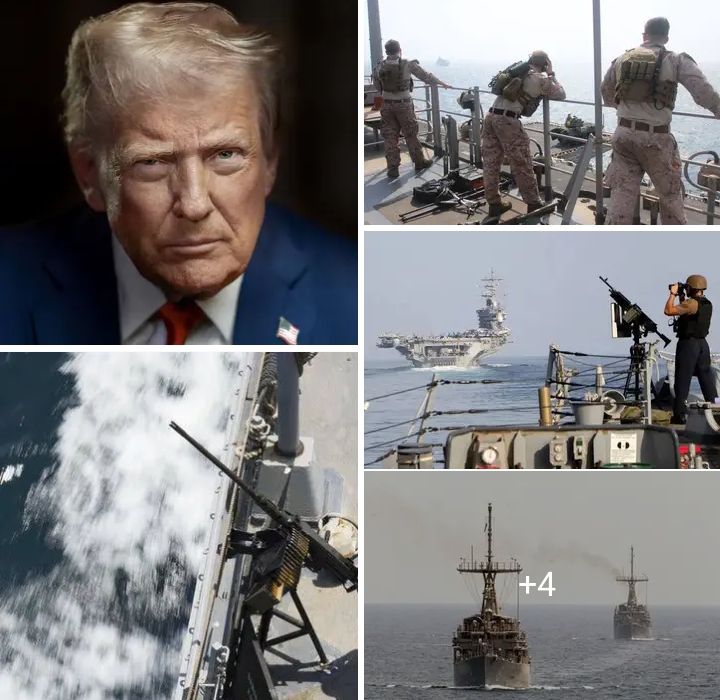
TRUMP LOCKS DOWN THE STRAIT OF HORMUZ AND THREATENS TO SINK IRANIAN WARSHIPS
President Donald Trump has ordered the United States military to begin a full naval blockade of Iranian ports and coastal areas, effective 10 a.m. EDT Monday.
Peace talks in Islamabad collapsed after 21 hours of negotiations led by Vice President JD Vance, leaving the fragile two-week ceasefire hanging by a thread.
Trump made his position crystal clear on social media: “Warning: If any of these ships come anywhere close to our BLOCKADE, they will be immediately ELIMINATED.”
The blockade targets all vessels entering or departing Iranian ports across the Arabian Gulf, Gulf of Oman and Arabian Sea.
Iran has fired back, warning it will treat any military vessels near the Strait as a ceasefire violation and threatening to target ports across the Persian Gulf in retaliation.
Nearly 20% of the world’s entire oil and gas supply moves through the Strait of Hormuz.
Iran has already blocked it since February 28 when the US-Israeli campaign began. Some ships were only allowed through after paying Iran up to $2 MILLION in transit fees. Trump called it “world extortion.”
China is watching closely and has warned the blockade does not serve the international community.
Beijing is reportedly preparing to deliver new air defense systems to Iran within weeks. France and Britain are now planning a multinational mission to restore freedom of navigation.
A retired US Admiral has already called the blockade what it legally is: AN ACT OF WAR.
AFRICAN IMPACT:
The UN Food and Agriculture Organisation has warned a global food crisis is now developing. Fertiliser, urea and agricultural supplies flowing through the Strait are choked off.
Africa’s farmers are directly in the firing line. Oil already hit $100 per barrel during this conflict. Every African nation that imports fuel, food and fertiliser is about to feel this blockade in their pockets and on their plates.
With the Strait of Hormuz now under US military control, how long before Africa starts feeling the full economic pain of this war?
African hype media