
What Trump Gets Wrong About China
Foreign Affairs has laid out a blunt assessment of Trump’s China policy and it paints a picture of Washington celebrating victories that Beijing quietly turns into its own strategic gains.
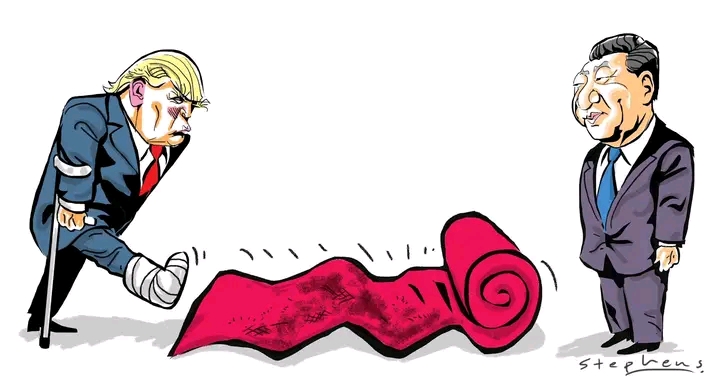
Trump may have described his meeting with Xi as a “12/10” success, but the substance behind the images tells a very different story. What appeared publicly as a diplomatic win was, in practical terms, a retreat disguised as progress.
China offered only limited and symbolic concessions, modest soybean purchases, continued mineral exports at reduced levels, yet walked away with significant advantages. In exchange for these superficial gestures, Trump paused port fees on Chinese vessels, weakened export controls and allowed subsidiaries of blacklisted Chinese firms continued access to advanced American technologies.
He even approved sales of high-performance AI chips that directly enhance China’s technological and military capabilities. Now, with consideration being given to loosening restrictions on Nvidia’s Blackwell chips, it raises a serious question about how US national security is being valued in these negotiations.
Regional confidence in the United States has also been shaken. Referring to Taiwan’s security as an “insurance policy”, something to be paid for rather than defended and delaying arms shipments did not deter China. Instead, it signalled to Taipei and the region that US commitments fluctuate with political convenience. Beijing gained leverage not through pressure, but through Washington’s own mixed messages.
At the same time, institutions designed to hold Beijing accountable, human rights offices, independent oversight bodies and media channels, have been weakened or dismantled. The very mechanisms that highlight authoritarian abuses were reduced just as Trump publicly praised Xi as a “friend” and “great leader.” Beijing benefits simply by Washington choosing to mute itself.

While US politics remains consumed by short-term disputes and shifting priorities, China continues to follow a long-term national strategy. Its leadership is stable, its diplomacy consistent and measured, its negotiating posture disciplined. There are no theatrics, no sudden shifts, no self-inflicted contradictions. China negotiates with patience, the US negotiates with urgency.
And while Washington debates budgets and partisan talking points, Beijing invests heavily in the future. China now produces twice as many STEM PhDs as the US, expands manufacturing capacity year after year, dominates critical mineral supply chains, accelerates clean energy and EV development and strengthens global supply networks. These gains are not accidental. They are the product of planning, investment and continuity.
The United States, despite its immense potential, keeps reacting instead of leading. It alienates allies, rewrites strategy with every election cycle, cuts essential research funding and treats a generational challenge as a series of transactional exchanges. No nation can outpace a population of 1.4 billion by resetting its approach every four years.
This is the core issue: China is not advancing because it is inherently stronger. It is advancing because it remains consistent while the US continues to undermine its own position through political volatility and strategic short-termism. One side plays the long game, the other performs for the moment.
Trump can declare every meeting a “12 out of 10” triumph, but if the results leave Beijing strengthened and Washington diminished, the conclusions speak for themselves.
If the US hopes to compete meaningfully, it does not need louder rhetoric. It needs stability, long-term investment, coherent strategy and leadership that understands geopolitics is not about personal relationships or public praise. At present, China is not defeating the United States.
The United States is doing that to itself.