

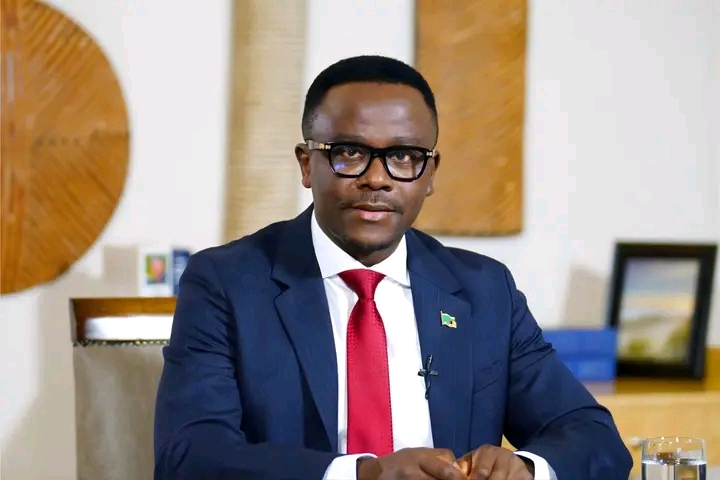
WILLAH MUDOLO: A SLOW START, A STRONG FINISH
By Brian Matambo – Sandton, South Africa
When Willah Joseph Mudolo appeared on Emmanuel Mwamba Verified Live this week, it was his first public interview since rumours surfaced that he intended to stand for the presidency. Expectations were high and curiosity even higher. For the first fifteen minutes, though, the moment seemed to slip from his grasp.
Mudolo began softly, almost hesitantly. He greeted viewers in several local languages, offered a short prayer, and spoke of gratitude and faith. His tone was courteous but cautious; sentences circled back on themselves, and his trademark confidence was nowhere to be seen. On social media, reactions came fast. Some mocked his delivery, others accused him of lacking charisma, while a few urged patience, reminding fellow viewers that it was his first major appearance in months. Facebook comment sections filled with jokes and premature verdicts, and WhatsApp groups buzzed with snippets taken out of context. It felt, for a moment, as though the broadcast might collapse under the weight of instant criticism.
Then, around the fifteen-minute mark, something shifted. Mudolo steadied himself, looked straight into the camera, and began to sound like the man many had only heard about. The nervous energy gave way to clarity and depth. He started telling his story, not as a speech but as a journey.
He spoke of a childhood divided between the Copperbelt and Sami Village, of selling small goods to pay his way through school, and of rising into corporate finance and international trade. He used that personal story to build a bridge to policy, arguing that Zambia’s next generation of leaders must understand both village poverty and global economics. “You can’t manage what you don’t understand,” he said, “and you can’t fix what you’ve never felt.”
From there, Mudolo moved into the heart of his message: economic transformation through ownership and innovation. He dismissed austerity as “a foreign prescription for a local disease” and proposed what he called asset-based financing, leveraging Zambia’s minerals, agriculture and manufacturing potential to attract patient capital. He explained how he had once designed a proposal that could have unlocked up to fifteen billion dollars through offtake-anchored mining finance, allowing the country to fund power and infrastructure without deepening external debt.
On energy, he blamed poor planning rather than nature for Zambia’s recurring load-shedding. “We can’t export electricity when our own people are in darkness,” he said, outlining a plan for decentralised generation across provinces. He linked that to agriculture, arguing that industrial hubs must grow out of farming regions, not just mining towns.
Asked about the much-talked-about Shepherd Bushiri saga in South Africa, Mudolo remained calm. He insisted the matter was purely business, that he had not been convicted of any offence, and that the controversy had been politicised. “The truth has never changed because of noise,” he said quietly, before pivoting back to the economy.
On politics, he called for opposition unity and for a return to civility in national debate. He praised the late Edgar Chagwa Lungu, urged empathy toward his family, and challenged current leaders to remember that power is temporary. He closed with an invitation to every Zambian, not to follow him, but to join him in rebuilding what belongs to us.
By the end of the hour, even some early sceptics online were conceding that the second half of the interview sounded like a different man altogether. The nervous candidate had transformed into a confident, articulate thinker with a command of policy detail and a moral spine rooted in faith and self-reliance. Whether one agrees with his prescriptions or not, Mudolo managed to turn what began as a shaky re-introduction into a statement of intent.
For a nation weary of noise and personality politics, it was a reminder that sometimes the first fifteen minutes are not the whole story. The applause or the judgement should come after the message is complete, not before the man has found his voice.
Bushiri lungu how many tainted people will this man be assiciated with?
The interviewer also wore “kid gloves” when question. Empathy for the Lungu family. When was this family ever empathic to Zambians? Lining their pockets with money that they or Lungu (himself cant explain). And we faithfully placed trust in them only to suffer that effects of leaving the state bankrupt.
Bushiri and his pius posture is suppose to make it alright that this man even went into business with him? This is the same posturing that delivered nothing for the people of Malawi.
Praise chanting and thinking that that will flood Malawi with all manner of “washing away” the real issues that we face on earth.
The same multinationals that they cut ties with, have been called back to work deal with the issues that face Malawi.
Lets be weary of these “men clothed in sheep skins” claiming that will suddenly wash away tge problems that face Zambia.
Until we are critical in our outlook about issues, we will end up beliving that “snake oil” businessmen and professionals will be our saviour. Brick and morta personalities who we know who they are. Where they came from and how they made their money. Flight by night success will deliver just that to us. Si ba Lungu? Overnight “kasaka ka ndalama”
This gentleman seems to have done so well for himself. Now, after listening to him speak, he claims to have been in PF since the early 2003 and worked with the late President Sata up todate. He claims to have a solution to the economy which he says is in ICU under HH. The problem is, why did he not provide solition in PF rule? Does he have to be President to provide solution. He says, he offered a deal of USD500 million for Konkola or Mopani which was rejected by UPND. Why did he not offer the same in PF which had even defaulted with loan repayment? So, these deals are from himself? And he would make profit? What do you think about a President making deals for his pocket?