

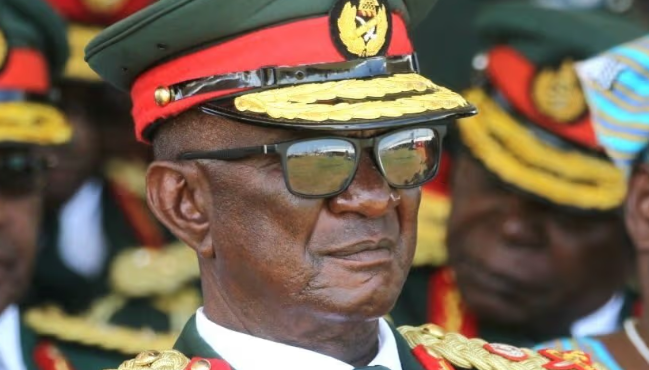
Zimbabwe President Emmerson Mnangagwa has appointed Lieutenant General Emmanuel Matatu as the new Commander of the Zimbabwe Defence Forces and Major General Asher Walter Tapfumaneyi as Commander of the Zimbabwe National Army, according to official government statements issued Tuesday.
The appointments follow the retirement of General Philip Valerio Sibanda, who has led the Defence Forces since 2017. Matatu, 72, a former ZIPRA liberation war veteran, was promoted to the rank of General and takes command on Nov 21. Tapfumaneyi, promoted to Lieutenant General, assumes command of the army on Nov 25.
Chief Secretary to the President and Cabinet Martin Rushwaya announced the appointments in separate statements, citing constitutional authority under section 216(2) of Zimbabwe’s Constitution.
The military reshuffle comes as Mnangagwa consolidates control over Zimbabwe’s security establishment ahead of the ruling ZANU-PF party’s 2027 congress. The appointments have drawn scrutiny due to Tapfumaneyi’s controversial background in intelligence and alleged role in Zimbabwe’s disputed 2023 elections.
Tapfumaneyi served as Deputy Director General of Zimbabwe’s Central Intelligence Organisation until March and was appointed Chief of Staff of the Zimbabwe National Army in May. The United States Treasury Department sanctioned him in March 2024 for “leading the campaign to disrupt the 2023 electoral process through his leadership of ruling party-affiliated groups.”
“He is also alleged to have been personally involved in past kidnappings,” the Treasury Department said in its sanctions announcement.
Investigative reports by The Sentry, a policy organisation focused on corruption and human rights abuses, linked Tapfumaneyi to Forever Associates Zimbabwe, a trust that allegedly spent 23 million dollars on ZANU-PF’s 2023 election campaign. The trust’s official deeds showed its trustees and founders included Tapfumaneyi’s family members and business associates, according to The Sentry’s May 2024 report.
Tapfumaneyi has denied any connection to the organisation. “I have nothing to do with Forever Associates Zimbabwe, either personally or officially,” he told The Sentry.
International election observers, including missions from the European Union, Commonwealth and Southern African Development Community, criticised Zimbabwe’s August 2023 elections as falling short of democratic standards.
Matatu previously served as Zimbabwe National Army Commander after his appointment in March. Military analysts describe him as a transitional figure due to his age, which exceeds Zimbabwe’s statutory retirement threshold of 70.
Sibanda, who turns 71 in December, maintained a reputation for professionalism during his eight-year tenure as Defence Forces Commander. His retirement had been anticipated after Mnangagwa extended his contract by one year in December 2024.
The appointments represent a significant shift in Zimbabwe’s military hierarchy. Since the 2017 military intervention that removed longtime leader Robert Mugabe, the armed forces have played a central role in Zimbabwe’s political landscape.
Mnangagwa has overseen sweeping changes across Zimbabwe’s security services this year, replacing long-serving Police Commissioner-General Godwin Matanga with Stephen Mutamba and appointing Fulton Mangwaya as Director-General of the Central Intelligence Organisation.
Political analysts say the appointments reflect Mnangagwa’s strategy to neutralise potential rivals within the military ahead of the 2028 general elections.
Neither Mnangagwa’s office nor the Defence Ministry responded to requests for comment on the appointments.